
Easy Drawing Ideas That Anyone Can Do | Easy Drawing Ideas For Beginners
Easy drawing ideas are perfect for anyone who has ever wanted to draw but felt intimidated by complex techniques, expensive tools, or the belief that artistic talent is something you’re born with rather than something you build. The truth is that drawing is a skill, not a gift reserved for a few, and anyone can improve simply by putting pencil to paper regularly. Easy drawings are not about creating masterpieces; they are about learning to observe, relax, and enjoy the process of making marks. When you remove pressure and focus on simple subjects, drawing becomes accessible, calming, and genuinely fun. Many beginners give up because they try to draw complicated scenes too early, but starting with easy ideas allows confidence to grow naturally while skills develop in the background.
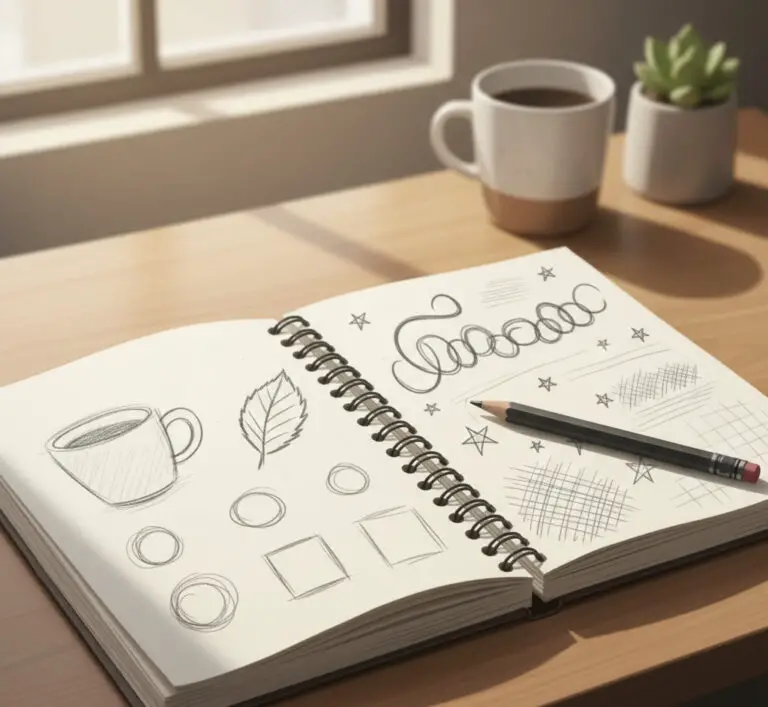
One of the simplest ways to begin drawing is by focusing on everyday objects. Common items around you, such as a cup, a book, a spoon, or a pair of glasses, make excellent subjects because they are familiar and don’t require imagination or complex composition. Drawing everyday objects teaches you how to see shapes, angles, and proportions without overthinking. A mug, for example, can be broken down into basic forms like cylinders and ovals, making it much easier to draw than it first appears. When you sketch objects you see daily, you also train your brain to notice small details like shadows, reflections, and curves, which are essential skills for any kind of drawing.
Another easy drawing idea that anyone can do is drawing simple shapes and turning them into recognizable forms. Circles, squares, triangles, and rectangles are the building blocks of almost every drawing, whether realistic or cartoon-style. Practicing drawing these shapes repeatedly helps improve hand control and line confidence. Once you are comfortable, you can combine shapes to create animals, people, or objects. A circle and a few lines can become a face, while rectangles and triangles can transform into houses or trees. This approach removes the fear of “getting it wrong” because you are always starting with something simple and adjustable.
Doodles are another excellent drawing idea, especially for people who feel they don’t have time or talent. Doodling is spontaneous and pressure-free, making it ideal for beginners. You can fill a page with patterns, swirls, dots, lines, and abstract shapes without worrying about realism. Over time, doodling improves muscle memory and creativity while helping you develop a personal style. Many professional artists still doodle regularly because it keeps their hand loose and their mind relaxed. Doodles can also be transformed into more detailed drawings later, proving that even random marks can lead to meaningful art.
Nature provides endless easy drawing inspiration that anyone can access. Leaves, flowers, clouds, mountains, and trees are forgiving subjects because they are naturally irregular. Unlike mechanical objects, nature doesn’t require perfect symmetry, which takes pressure off beginners. Drawing a leaf, for instance, can be as simple as sketching an outline and adding a few veins. Clouds can be drawn using soft, uneven shapes, while trees can start with a trunk and branch outward naturally. Nature drawing also helps you practice textures and shading in a gentle, intuitive way.
Another approachable drawing idea is sketching simple landscapes. You don’t need to draw complex perspectives or detailed buildings; even a horizon line, a few hills, and a sun can create a complete scene. Landscapes teach depth and composition without overwhelming detail. You can experiment with foreground and background by varying line thickness or shading intensity. Simple landscapes are also great for experimenting with mood, as small changes in shading can suggest different times of day or weather conditions.
Cartoon-style drawings are especially beginner-friendly because they don’t require realistic proportions. Drawing simple characters with oversized heads, expressive eyes, and minimal details allows you to focus on storytelling rather than perfection. Cartoons encourage exaggeration, which makes mistakes feel intentional instead of wrong. Even stick figures can evolve into expressive characters with just a few added details like facial expressions or clothing. Cartoon drawing is also a great way to develop creativity and confidence, especially for younger artists or those returning to drawing after a long break.
Faces are often seen as difficult, but simplified face drawings are actually easy drawing ideas anyone can try. Instead of aiming for realism, you can draw basic face shapes and minimal features. Two dots and a curved line can already suggest emotion, while simple noses and eyebrows add personality. Practicing simplified faces helps you understand facial proportions in a low-pressure way. Over time, these basic faces can become more detailed naturally as your observation skills improve.
Animals are another popular and approachable drawing subject. Simple animal drawings work best when you focus on their basic shapes and defining features. A cat, for example, can start as a circle for the head and an oval for the body, with triangles for ears. Birds, fish, and insects are also excellent beginner subjects because they can be drawn in stylized ways without losing recognition. Drawing animals helps improve fluid lines and teaches movement, especially when you experiment with poses.
Pattern drawing is one of the easiest and most relaxing drawing ideas available. Repeating shapes, lines, or symbols across a page helps build rhythm and consistency. Patterns can be geometric or organic, structured or free-flowing. This type of drawing improves focus and patience while removing the pressure to “draw something meaningful.” Pattern drawing is also highly shareable online, making it a great option for artists interested in social media content.
Another easy drawing idea is drawing from memory or imagination without worrying about accuracy. When you draw something imagined, there is no reference to compare it to, which eliminates fear of mistakes. You can draw imaginary creatures, simple fantasy landscapes, or abstract scenes inspired by emotions or music. This kind of drawing strengthens creative thinking and helps you trust your instincts. Many artists discover their unique style through imaginative drawing rather than copying references.
Shadow and light exercises are also beginner-friendly drawing ideas. You can draw a simple shape, such as a sphere or cube, and practice adding shading. This teaches how light behaves and gives drawings a sense of depth. Shading doesn’t need to be perfect; even simple gradients can make a drawing feel more realistic. Practicing shadows with basic forms builds a strong foundation for more complex drawings later.
Drawing hands may sound difficult, but simplified hand sketches are actually very useful beginner exercises. Instead of focusing on every finger joint, you can draw hands as simple shapes and gestures. Even rough hand sketches improve observation skills and coordination. The same approach applies to feet, arms, and legs, which can all be simplified into basic forms. These studies prepare you for drawing people without overwhelming detail.
Text and typography drawing is another easy drawing idea that anyone can do. Drawing letters, words, or quotes allows you to practice line quality and composition. You can experiment with different lettering styles, from block letters to cursive or decorative fonts. Lettering combines drawing and design, making it appealing even to those who don’t see themselves as traditional artists.
Drawing from photos is a helpful way to practice without pressure. Photos don’t move, so you can take your time observing details. Choosing simple photos, such as objects, pets, or landscapes, makes the process manageable. Over time, drawing from photos improves accuracy and confidence. It also helps train your eye to translate two-dimensional images into hand-drawn versions.
Daily sketching is one of the best habits for improving drawing skills, even if the drawings are simple. A quick sketch each day builds consistency and reduces fear. Easy drawing ideas fit perfectly into daily practice because they don’t require long sessions or elaborate setups. Over weeks and months, these small efforts lead to noticeable improvement.
Easy drawing ideas are powerful because they remove barriers. They show that drawing is not about perfection, talent, or expensive tools, but about observation, repetition, and enjoyment. Anyone can draw when the expectations are realistic and the focus is on progress rather than results. By starting with simple ideas and allowing yourself to explore without judgment, drawing becomes a habit instead of a challenge. Over time, those easy drawings naturally evolve into more confident, expressive artwork, proving that anyone truly can learn to draw.