
How to Draw for Beginners: Step-by-Step Guide
Learning how to draw can feel intimidating at first, especially if you believe drawing is a talent that only a few people are born with. In reality, drawing is a skill that anyone can learn with practice, patience, and the right approach. Many professional artists started exactly where beginners are today—holding a pencil, unsure where to start. Drawing is simply the process of observing shapes, lines, and shadows, and then translating them onto paper. With consistent practice and the right techniques, beginners can gradually improve their drawing skills and develop their own artistic style. This guide will walk you through the fundamental steps of learning how to draw, from choosing the right tools to practicing essential techniques that will help you build a strong foundation.
The first step in learning how to draw is understanding that you don’t need expensive tools to begin. A simple pencil, an eraser, and a sheet of paper are enough to start your drawing journey. Many beginners believe they need professional supplies before they can draw well, but the truth is that creativity and practice matter far more than materials. A standard HB pencil is perfect for beginners because it allows you to create both light and dark lines. A soft eraser helps correct mistakes and refine your drawings, while a sketchbook gives you a place to practice consistently. Having a dedicated sketchbook is helpful because it allows you to track your progress over time. When you look back at your earlier drawings after several weeks or months of practice, you will clearly see how much you have improved.
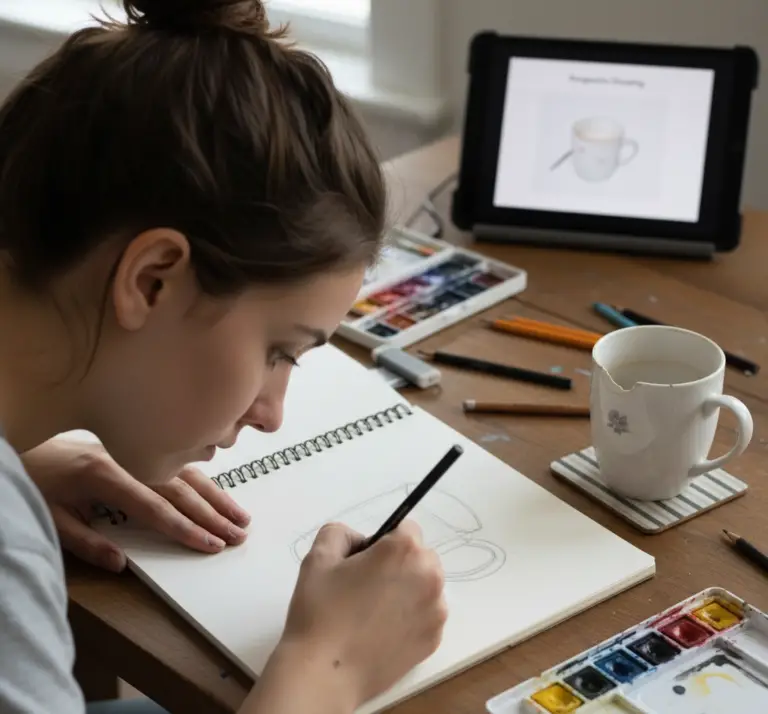
Once you have your basic drawing tools, the next step is learning to see like an artist. Drawing is not just about moving your hand on paper—it is about observing the world carefully. Beginners often try to draw objects based on what they think they look like rather than what they actually see. For example, many people draw eyes as simple almond shapes or trees as basic outlines because that is how they remember them. However, artists train themselves to observe shapes, proportions, and details more accurately. When drawing any object, take time to study it carefully. Notice its basic shapes, how light hits it, and how shadows form around it. This observational approach helps you create drawings that look more realistic and balanced.
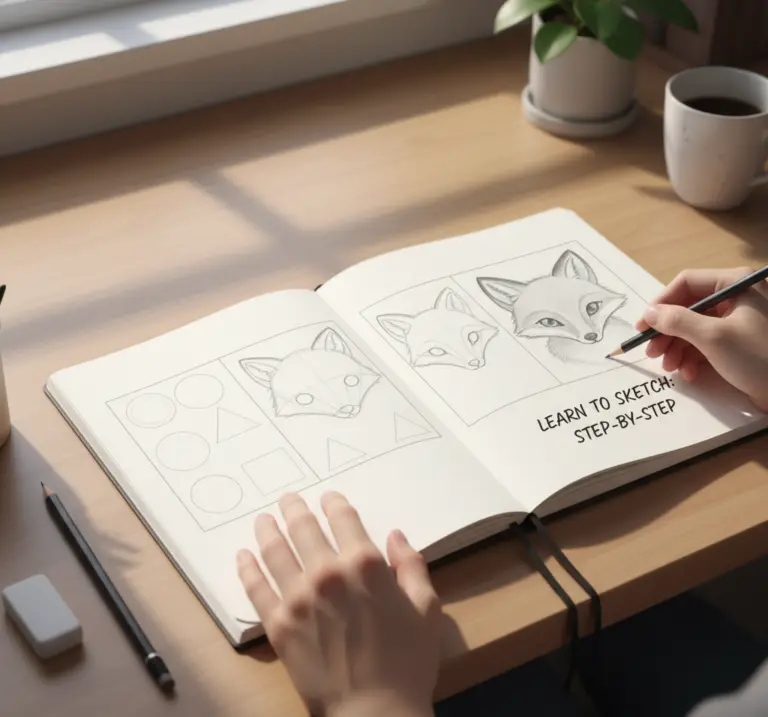
One of the most important techniques beginners should learn is drawing using basic shapes. Almost every object in the world can be simplified into simple shapes such as circles, squares, triangles, and rectangles. For instance, a human head can start as a circle, while the body can be built using rectangles and cylinders. Animals, buildings, and everyday objects can also be broken down into simple shapes before adding details. This method makes complex drawings much easier because you are building the drawing step by step instead of trying to draw everything at once. Start by sketching light shapes with your pencil. These shapes act as guidelines that help you maintain correct proportions and structure.
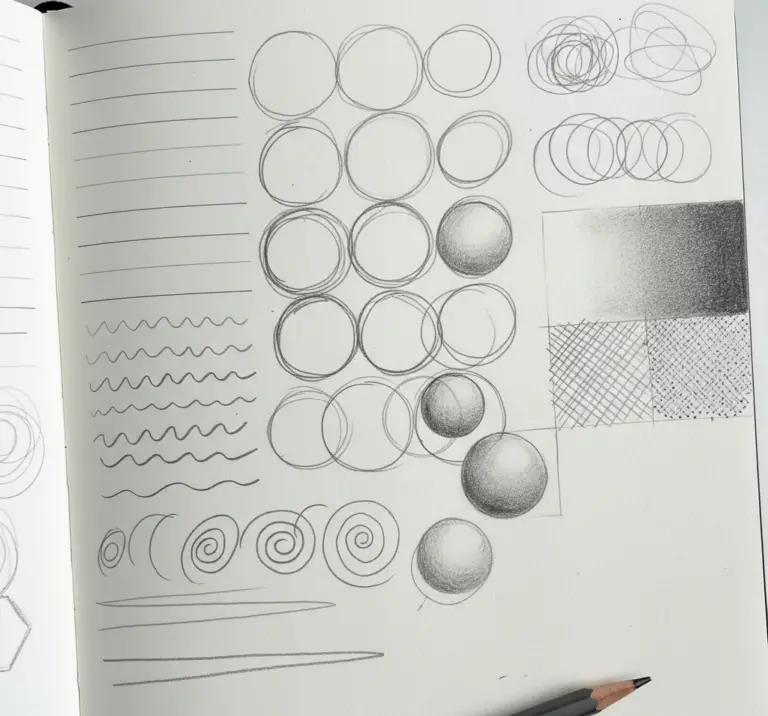
Practicing basic lines is another crucial step in learning how to draw. Lines are the foundation of every drawing, and improving your control over them will greatly improve your artwork. Beginners should practice drawing straight lines, curved lines, zigzag lines, and circular shapes. Try filling a page with different types of lines while maintaining steady hand movement. This exercise may seem simple, but it helps develop muscle memory and improves hand coordination. Over time, your lines will become smoother and more confident, which will make your drawings look cleaner and more professional.
After practicing shapes and lines, the next step is learning about proportions. Proportion refers to the relationship between the sizes of different parts of an object. When proportions are incorrect, drawings can look strange or unrealistic. For example, if you draw a face with eyes that are too large or place them too high on the head, the drawing will look unnatural. To improve proportions, artists often use measuring techniques. One common method is using your pencil to visually measure the height and width of an object. By comparing different parts of the subject, you can adjust your drawing to maintain accurate proportions.
Another essential drawing skill for beginners is shading. Shading is what gives drawings depth, dimension, and realism. Without shading, drawings may appear flat and lifeless. Shading works by adding darker and lighter tones to represent how light interacts with an object. When light hits an object, some areas appear bright while others fall into shadow. Learning to recognize these light and shadow areas will greatly improve your drawings. Beginners can start by practicing simple shading techniques such as hatching, cross-hatching, and blending. Hatching involves drawing parallel lines to create darker areas, while cross-hatching uses intersecting lines. Blending involves smoothing the shading with your finger, a blending stump, or a tissue to create softer transitions.
Practicing drawing everyday objects is one of the best ways to improve your skills. Look around your room and choose simple objects such as a cup, a book, or a fruit. Place the object in front of you and observe it carefully before drawing. Start by sketching its basic shapes lightly with your pencil. Then gradually refine the drawing by adding details and shading. Drawing from real objects helps train your observation skills and improves your understanding of shapes, proportions, and lighting. Over time, you will become more comfortable translating what you see into a drawing.
Consistency is one of the most important factors in improving your drawing skills. Many beginners feel discouraged when their drawings do not look perfect right away. However, drawing is a skill that develops gradually through regular practice. Even professional artists continue practicing and learning throughout their careers. Try to draw for at least 15 to 30 minutes every day. Short, consistent practice sessions are more effective than long sessions done only occasionally. Over time, these daily drawing habits will lead to noticeable improvement.
Another helpful strategy for beginners is using references. A reference is simply an image or object you use as a guide while drawing. References can include photographs, real-life objects, or even other artworks. Using references helps you understand details, shapes, and proportions more clearly. Some beginners worry that using references is cheating, but in reality, almost all artists use references at some point. References are valuable learning tools that help you study how objects look and how they are structured.
Learning from other artists can also accelerate your progress. Watching drawing tutorials, studying artwork, and observing different techniques can give you new ideas and methods to try. Many artists share step-by-step drawing tutorials that demonstrate how to draw specific subjects such as faces, animals, or landscapes. By following these tutorials, beginners can learn useful techniques and gradually build confidence in their abilities.
Mistakes are a natural part of the drawing process and should not be feared. In fact, mistakes are often valuable learning opportunities. When a drawing does not turn out the way you expected, try to understand why. Perhaps the proportions were off, the shapes were inaccurate, or the shading was inconsistent. Identifying these issues helps you improve in future drawings. Instead of throwing away imperfect drawings, keep them as part of your learning journey. Looking back at earlier mistakes can help you appreciate your progress and understand how far you have come.
As you continue practicing, you may start developing your own drawing style. An artistic style refers to the unique way an artist expresses ideas through their artwork. Some artists prefer realistic drawings with detailed shading, while others enjoy cartoon-style illustrations with bold lines and bright colors. Your style will naturally evolve as you experiment with different subjects and techniques. There is no right or wrong style—what matters most is enjoying the creative process and expressing your ideas.
Drawing can also be a relaxing and rewarding hobby. Many people find that drawing helps reduce stress and improve focus. The act of concentrating on shapes, lines, and shading allows the mind to slow down and become more present in the moment. For this reason, drawing is often used as a form of creative therapy. Whether you draw for fun, self-expression, or skill development, the process itself can be highly enjoyable and fulfilling.
Another way to stay motivated as a beginner is to participate in drawing challenges or creative prompts. For example, you can challenge yourself to draw one object every day for a month or try different themes each week. Creative prompts push you to explore new subjects and expand your artistic abilities. They also make the learning process more exciting and less repetitive.
As your confidence grows, you can begin exploring more advanced drawing topics such as perspective, anatomy, and composition. Perspective helps create the illusion of depth in drawings, making objects appear closer or farther away. Anatomy is important for drawing people and animals accurately, while composition focuses on arranging elements within a drawing to create a balanced and visually appealing image. Although these topics may seem complex at first, they become easier to understand with practice and patience.
In conclusion, learning how to draw as a beginner is a journey that requires curiosity, observation, and consistent practice. By starting with simple tools, practicing basic shapes and lines, studying proportions, and experimenting with shading techniques, anyone can gradually improve their drawing skills. Drawing is not about perfection—it is about learning, exploring, and enjoying the creative process. Every sketch you create brings you one step closer to becoming a better artist. With dedication and regular practice, beginners can transform simple drawings into impressive works of art and discover the joy of expressing themselves through creativity.