
Why Copying Art Is Actually Good (If You Do It Right)
Copying art has a terrible reputation. Say the word “copying” in an art space and people tense up, ready to lecture you about originality, plagiarism, and finding your own style. Beginners are often warned early and loudly that copying will ruin their creativity, make them lazy, or turn them into artists who can only imitate and never invent. As a result, many people feel guilty for doing something that, ironically, almost every great artist in history has done extensively. The truth is that copying art is not only normal, it’s foundational. The problem isn’t copying itself. The problem is copying without intention, reflection, or growth. When done thoughtfully, copying can be one of the fastest and most powerful ways to improve your drawing skills.
From the moment humans began making images, artists have learned by imitation. Long before formal art schools existed, apprentices learned by copying their masters’ work stroke by stroke. In Renaissance workshops, students spent years reproducing drawings, paintings, and sculptures before being allowed to create original compositions. This wasn’t seen as cheating or a lack of imagination. It was understood as training the eye and the hand. You don’t learn proportion, anatomy, light, or composition through vague inspiration alone. You learn it by observing how someone else solved those problems and then physically repeating their decisions. Copying is how visual knowledge is passed down.
One reason copying is so effective is that drawing is not just a mental activity; it’s a physical skill. Your hand has to learn how to move in specific ways to produce convincing lines, shapes, and values. You can understand perspective intellectually and still be unable to draw a believable box. Copying forces your hand to follow paths it wouldn’t naturally choose. It introduces muscle memory that simply doesn’t develop when you only draw from imagination. Much like a musician practices scales written by others, artists practice drawings made by others to build technical fluency.
Another overlooked benefit of copying is how it trains your eye. Beginners often think they see accurately, but they don’t. They draw symbols instead of reality: an eye becomes an almond shape, a nose becomes a simple line, a head becomes an oval. When you copy a drawing carefully, especially a realistic or well-constructed one, you’re forced to confront proportions, angles, and relationships that your brain would normally simplify or ignore. You start noticing subtle curves, asymmetries, and spacing that you might never invent on your own. Over time, this visual sensitivity carries into your original work.
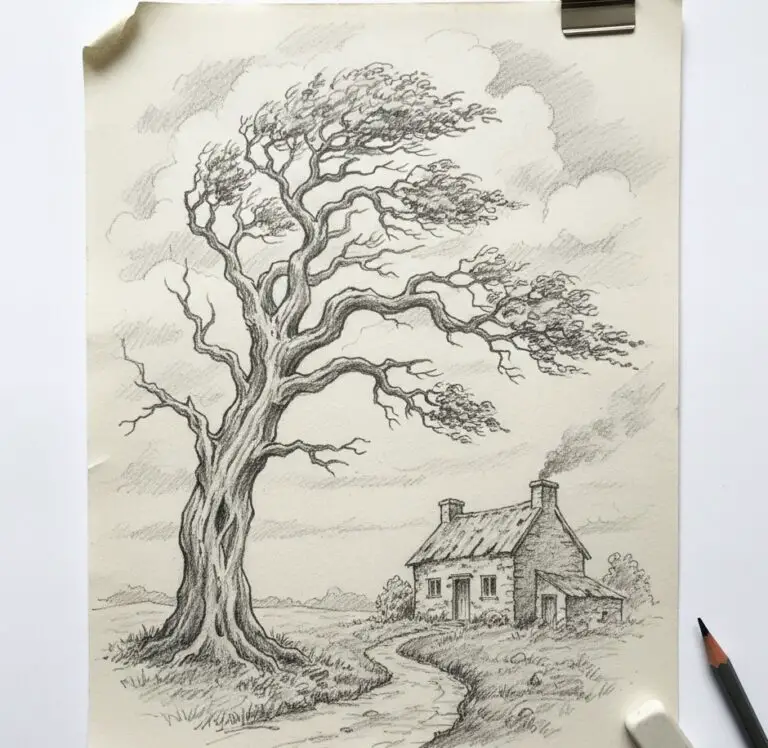
Copying also demystifies skill. When you look at a finished piece by an artist you admire, it can feel magical and unattainable, as if they possess some secret talent you lack. Copying breaks that illusion. As you replicate their work, you begin to see the structure underneath the beauty. You notice how a complex drawing is built from simple shapes, how confident lines are often the result of planning, and how details are layered gradually rather than dumped all at once. The artist stops being a genius on a pedestal and becomes a problem-solver whose methods you can learn from.
However, copying becomes harmful when it’s done mindlessly. Tracing or reproducing an image without thinking about why things look the way they do can stall growth. If you copy only to make something that looks good, without analyzing form, proportion, or intent, you may improve your hand control but not your understanding. This is where many people get stuck. They fill sketchbooks with copies yet struggle to draw independently. The issue isn’t that they copied, but that they didn’t study while copying. They focused on the result rather than the process.
Doing it right means approaching copying as investigation rather than duplication. When you copy a drawing, you should be asking questions constantly. Why did the artist choose this angle? How did they simplify this complex shape? Where did they exaggerate, and where did they restrain themselves? How are thick and thin lines used to guide the eye? What did they leave out? Each copied piece becomes a lesson rather than a trophy. Even copying mistakes can be valuable if you stop to ask why something feels off.
Another key distinction is between copying and claiming. Copying for learning is private or clearly credited. Passing copied work off as your own original creation is unethical and ultimately self-defeating. It doesn’t build real confidence, and it doesn’t prepare you to create independently. Healthy copying is transparent, temporary, and purposeful. You copy to absorb skills, not to replace your own voice. Over time, the influence of many artists blends together, and what emerges naturally becomes your style.
Style, despite popular belief, is not something you invent out of thin air. It’s something that forms slowly as a byproduct of your influences, preferences, and limitations. Every artist’s style is essentially a collection of things they borrowed, modified, and combined. When people say “find your style,” what they really mean is “learn a lot, try a lot, and notice what sticks.” Copying accelerates this process by exposing you to a wide range of visual languages. The more you copy thoughtfully, the more raw material your brain has to remix into something personal.
There’s also a psychological benefit to copying that doesn’t get talked about enough. Drawing from imagination can be intimidating, especially early on. The blank page feels heavy with expectation. Copying removes some of that pressure. You’re not responsible for inventing everything; your job is to observe and translate. This can make practice feel safer and more approachable, which matters because consistency is what actually leads to improvement. Many people quit drawing not because they lack talent, but because they associate drawing with frustration and failure. Copying can help rebuild confidence and enjoyment.
That said, copying should not be the only way you draw. It works best when balanced with other forms of practice, such as drawing from life, from reference photos, and from imagination. Each mode teaches different skills. Copying sharpens observation and technique, while drawing from life teaches truth and depth, and drawing from imagination strengthens visual memory and problem-solving. When copying dominates to the exclusion of everything else, growth becomes lopsided. When it’s integrated thoughtfully, it becomes a powerful support rather than a crutch.
One effective approach is to copy with variation. Instead of reproducing a drawing exactly, try changing something intentionally. Alter the pose, adjust the lighting, simplify the shapes, or redraw the subject in a different style. This forces you to understand the underlying structure rather than rely on surface details. Another method is delayed copying, where you study a piece closely, put it away, and then redraw it from memory. This reveals what you truly understood versus what you merely traced with your eyes.
It’s also important to choose what you copy wisely. Not all art is equally instructive for every goal. If you want to improve anatomy, copying stylized cartoons exclusively may limit you. If you want to develop expressive linework, copying stiff academic drawings may not help as much. Copy artists whose strengths align with what you want to learn, and don’t be afraid to copy across styles and eras. A realistic painter can learn a lot from comics, and a digital illustrator can gain insight from charcoal sketches or ink drawings.
For beginners especially, copying can act as a bridge between observation and invention. Many people jump too quickly into drawing original scenes without having the visual vocabulary to support them. They end up frustrated by drawings that don’t match their ideas. Copying helps build that vocabulary. It teaches you what shapes actually look like, how forms connect, and how complexity is managed. Once those patterns are internalized, drawing from imagination becomes far less overwhelming.
Ultimately, copying art is not about becoming someone else. It’s about learning how drawing works. It’s about understanding visual language the same way writers study sentences written by others or chefs recreate classic recipes before inventing their own. No one expects a pianist to compose symphonies before learning existing music. Art should be no different. Originality doesn’t come from avoiding influence; it comes from digesting influence so thoroughly that it transforms into something uniquely yours.
If copying feels wrong, it’s often because of how it’s framed, not because of what it is. When you see copying as stealing, it feels shameful. When you see it as studying, it feels empowering. The shift is subtle but important. Copy with curiosity, humility, and intention. Use it as a tool, not an identity. Let it teach you, challenge you, and then step away from it when it’s time to speak in your own visual voice.
In the end, copying is not a shortcut around learning. It is learning. Done carelessly, it can keep you stuck. Done thoughtfully, it can unlock progress faster than almost anything else. The goal isn’t to copy forever. The goal is to copy well enough, and wisely enough, that one day you don’t need to anymore—and when that day comes, everything you absorbed will still be there, quietly shaping the way you draw.